TRENCHES OF IDEAS - The US Cuban conflict – - Roadmaps out of the deadlock-
Trenches of ideas are worth more than trenches of stone. There is no prow that can cut through a cloud of ideas. A powerful idea, flashed in time before the world, can stop a squadron of battleships, just like the mystic banner of the Last Judgment.
Josė Martì, from his 1891 essay “Nuestra America”
I am reborn from the gunpowder
which a guerrilla rifle
spread on the mountain
so that the world would be reborn in its turn,
that the whole sea would be reborn,
all the dust,
all the dust of Cuba.
Nancy Morejón (translated by Jean Andrews)
Introduction
The decades-long conflict between the US and Cuba should come to an end. Only the most cynical, the most callous, approach can argue for this cause of misery and uncertainty to endure for much longer. Our challenge in this article is to take a realistic look, through a purely conflict management lens, at the conflict options available to the parties, to assess the feasibility of such options, and then to suggest the best strategy to resolve this harmful deadlock.
A very brief history
Our assessment of this conflict is enhanced by a brief look at the history preceding this position we have reached. In geopolitical conflict we know that histories shape identities, and identities determine conflict outcomes. Even though we see US intervention in Cuba’s affairs going back to its formal independence in 1902, that relationship was generally a good one.
This level of intervention was allowed by the so-called Platt Amendment, and saw various commercial and political exchanges and mutually beneficial arrangements, including the leasing of Guantanamo Bay, a rather dominant US presence in Cuban sugar production and flourishing cultural ties throughout the first half of the 20th century.
At the political helm towards the end of that period was Fulgencio Batista, in a governance model that that we can fairly describe as a US-backed dictatorship. That of course came to an abrupt end on January 1, 1959, with Fidel Castro’s revolutionaries overthrowing Batista.
The reluctant hand of acceptance extended at the time by the US, to their credit, in accepting the Castro government, was soon slapped away when Castro nationalised US assets, imposed taxes on US imports and, maybe the biggest sin at that time in US history, very openly aligned Cuba with the Soviet Union. Eisenhower responded in an escalating manner, and predictably, diplomatic ties between the erstwhile allies broke on the 1st January, 1961.
JF Kennedy’s administration certainly did not ease these tensions, and the 1961 failed Bay of Pigs invasion and the 1962 Cuban Missile Crisis (the latter bringing the world to the brink of nuclear war) ended what remained of any hopes of improving this escalation.
From this wreckage the foundations of much of today’s crisis was established. From the near-total trade ban against Cuba from February 1962, prohibiting most imports and exports, with a few exceptions for food and medicine, the Cold War was the perfect backdrop for the openly hostile relationship between these two countries.
This concentrated campaign has effectively isolated Cuba diplomatically and economically. Tensions were increased sporadically by events such as Cuban support for revolutions abroad, and the 1996 Brothers to the Rescue incident.
The collapse of the Soviet Union devastated the Cuban economy at that time. The US increasingly tightened sanctions, as being perceived as an effective method of regime change. In 1982, the US designated Cuba a state sponsor of terrorism. The 1992 Cuba Democracy Act and the 1996 Helms-Burton Act brought further pressures to bear, codified the embargo, and will play a role in our assessment and conclusion further on.
From 2014, President Obama pursued the normalization of the relationship, with diplomatic relations restored in 2015, some embargo aspects reduced, removal from the terrorism list, an ease of travel and remittance restrictions examples of the so-called Cuban thaw. Obama even visited Cuba, the first sitting US president to do so in 88 years.
The first Trump administration practically reversed that momentum, re-designating Cuba a terrorism sponsor in 2021, and activating Helms-Burton lawsuits. The Biden administration tinkered with minor relaxations of restrictions, but showed no real appetite for changing any of the core embargo and restrictions, with ongoing disputes as to human rights violations, migration and Cuba’s alliances remaining the main stated causes for the conflict. Cuba, in turn, blamed the embargo as the root cause of its economic and developmental woes, and the entire campaign as unjustified interference in the exercise of its sovereignty.
Since the inception of the second Trump administration in January 2025, maximum pressure policies have been applied to Cuba. Sanctions have been tightened further, and rhetoric has escalated considerably. The fall of Venezuela’s Maduro has also heightened tensions and potentially destabilized the region. The US has repeated its demands that Cuba should consider democracy as governance model, and that its alliances with China, Russia and Iran should cease.
On president Trump’s first day in office Cuba was re-designated as a state sponsor of terrorism, reversing president Biden’s earlier decision to remove them, and in June 2025 Trump signed a National Security Presidential Memorandum, further formalizing a hardline policy. Among the steep escalation of measures flowing from this decision we note visa restrictions and the reactivation of Helms-Burton Title III provisions. After Maduro’s capture by the US in early 2026, Trump issued an executive order declaring Cuba an “unusual and extraordinary threat” to US national security (EO dated 29 January 2026). Punitive tariffs against countries supplying oil to Cuba were introduced by way of this order, amongst other measures. Predictably, these escalations led to a fuel crisis, power outages and an observable humanitarian strain in Cuba.
And the screws kept on tightening. President Trump, as well as Secretary of State Marco Rubio, have repeatedly signaled receptivity to some sort of “deal” with Cuban leaders, with hints at a “friendly takeover” of Cuba. Informal discussions took place, without any discernible progress, and with Cuba openly rejecting capitulation or meaningful concessions. In mid-May 2026, the US indicted former president Raul Castro and others over the 1996 shooting down of Brothers to the Rescue planes, with charge details involving murder and conspiracy. The USS Nimitz was deployed for “naval deployment” nearby the Cuban coastline, and sanctions were tightened.
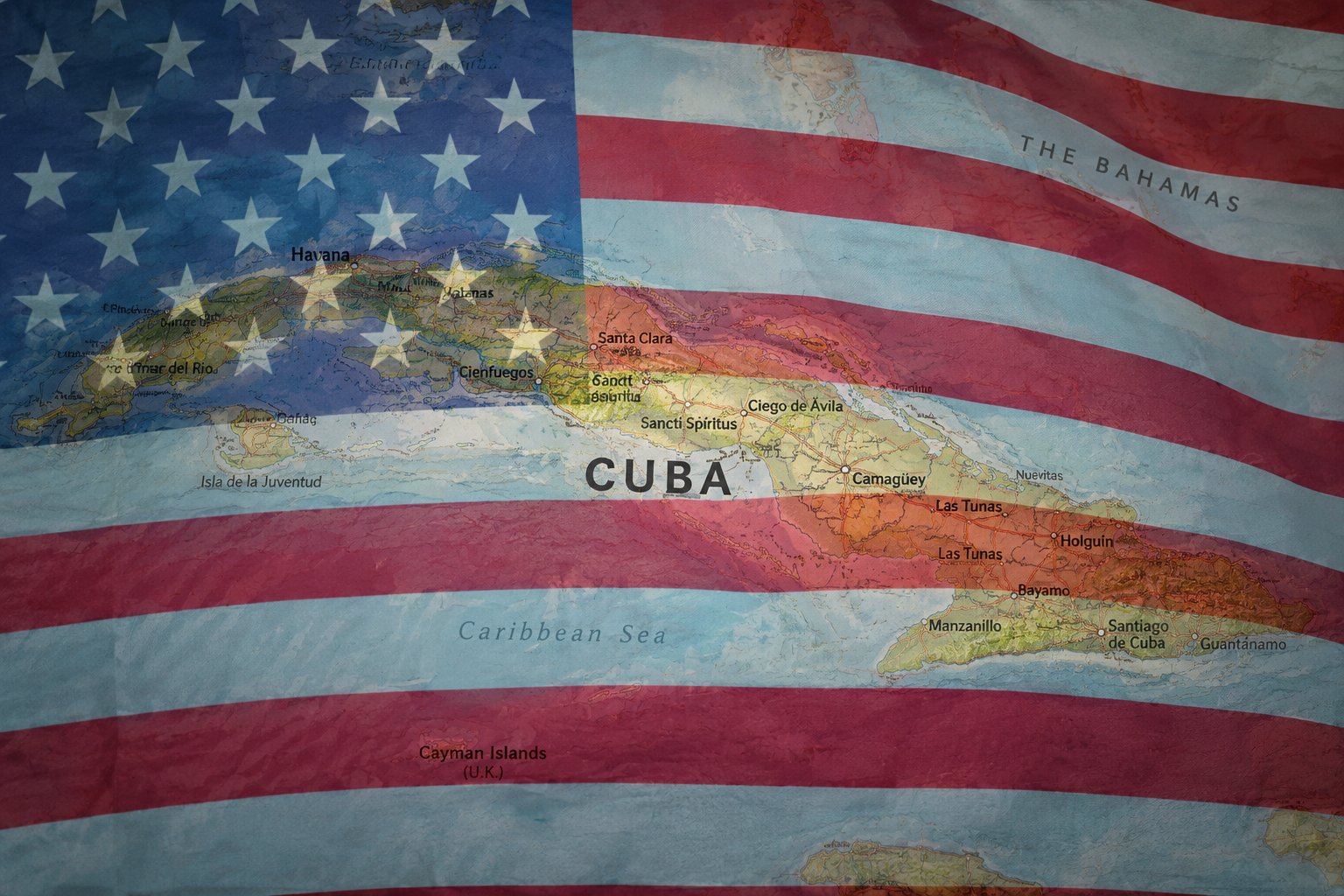
What is the conflict focused on?
To craft the right answers, we need to understand, and frame, the questions accurately. This conflict is, ostensibly, about the limits of sovereignty and the boundaries beyond which a foreign country can, and arguably should, interfere in the domestic life of another country. The US has consistently aimed at regime change in Cuba, citing the values of democracy, the interests of the Cuban people, alleged human rights abuses and the Cuban alignments with some of America’s enemies as reasons for the sustained attacks on Cuba. Before we analyse the conflict itself, and consider ways of resolving it, we need to understand the benefits and costs involved for sustaining this conflict, and, for what it may be worth, global and localised opinions and sentiments about it.
Negative consequences for Cuba
We have listed some of the most serious trade, economic and diplomatic consequences of the embargo and other measures for Cuba earlier. The campaign is obviously disastrous from the Cuban perspective, as can easily be accepted after 64 years of concentrated effort from the US. Economic, social and humanitarian costs to the Cuban people over this period would be hard to quantify convincingly, with the country’s own socialist system and the collapse of the Soviet Union contributing to these effects. In pure economic terms, estimates run between 1 and 2 trillion US dollars lost since the early 1960s, with current annual losses calculated at between 4 and 7 billion US dollars.
The Cuban economy faces negative or low GDP growth, high inflation, food and fuel shortages, energy blackouts and travel and tourism restrictions, to name a few of the more harmful categories. Biotech, industry all suffer, grid collapses cause wide-ranging damage, and production has mostly found a low mark and stuck to it.
Negative consequences for the US
From high moral ground one would of course argue that any reasonable price paid by the US in pursuit of its’ stated goals is justifiable. Rhetoric aside, any conflict must be able to somehow justify its price. The US Chamber of Commerce estimates annual sales and export losses to Cuba at just over a $1 billion. The Cuba Policy Foundation estimates broader economic output losses at approximately $3.6 billion to $4.8 billion per year. US agricultural exports in particular is expected to rise significantly without the embargo. US companies are barred from most transactions with Cuba, which hits sectors such as tourism, hospitality, cruises and investment particularly hard.
Studies suggest that thousands of jobs could be created in these industries should the embargo be lifted. In addition, there are compliance burdens and costs, the loss of market access and other downstream costs and lost opportunities. Overall, in economic terms, I do not believe that it can be argued convincingly that these losses are really significant in the greater US economy. Diplomatically, the US faces near-unanimous condemnation from the UN General Assembly, and the embargo inarguably creates friction with Latin American and European allies that do trade with Cuba. Economic conditions in Cuba creates waves of migration consequences for the US, all met with differing, and now escalating, responses.
Possibly the most serious downside of the embargo is the observable fact that the US loss of influence in Cuba and the region has created an opening for increased influence and presence in economic, diplomatic and even military aspects for China, Russia and Iran.
Public opinion
Geopolitical conflicts are often resolved without public opinion playing a decisive role. It is of course not an irrelevant factor, and certainly does provide some guidance strategically.
We have mentioned the UN condemnation, which given various factors seem to have no real effect on US policy over the years. Internally the question has negligible effects on the US election cycles, with the only really noticeable effect visible in Florida among Cuban-American voters, with even that now seemingly diminishing, with President Trump clearing approximately 70% of Cuban-American voters support in 2024 exit polls.
Traditionally, Pew and Gallup polls support the normalization of the relationship, without the issue really becoming an important topic outside of such polls. What do we know about current Cuban public sentiment about the blockade, and about the Cuban regime? The authoritarian nature of the regime of course makes reliable information very difficult. Independent surveys are not permitted, and official channels control public narratives with an iron grip. Our search here will be limited to inferences from other sources, such as protests.
Emigration, and occasional attempted and sporadic surveys of a reasonably independent nature. Informal reports show a marked decline in support for the regime and the Communist Party. Nationwide demonstrations, such as the July 2021 events, or the 2024 more limited protests, ostensibly complain about blackouts, a shortage of fuel, food and medicine, but ultimately of course amount to growing criticism of economic mismanagement, repression and declining living standards. Cuba has lost in the region of 10-13% of its population in recent years through massive outflows of people who have given up on the dream of real improvement under the current system.
A 2023-2024 Cubadata survey shows, with a measure of acceptable methodology, that approximately half of Cubans believe that the socialist model should be abandoned, alongside the government, 57% of people believe that the Communist Party does not respond to people’s needs, and other traditional free speech and public trust markers all show the same trend towards dissatisfaction and serious discontent. Repression keeps dissent fragmented and difficult to gauge, or organize into any coherent opposition. Cuban views of the US in general, and the blockade in particular, are even more difficult to assess reliably in recent years, and a general mixture of criticism of the regime and the blockade seems to prevail. With the regime heavily blaming nearly all woes on the blockade, an accurate picture is difficult to form here.
The Cuban Catholic Church has suffered declining attendance and membership figures under the atheist regime, but remains an independent voice for many. In line with developed Vatican policy, dialogue is actively pursued over isolation, and in February 2026 Pope Leo IVX echoed the earlier Cuban Catholic Bishops expressed concern that Cuba needs urgent changes, but that it does not need more anguish and pain. He expressed “great concern” over the escalating US-Cuba tensions, and called for “sincere and effective dialogue”.
Is the blockade working as a conflict strategy?
It is important to note that independent analyses indicate that the embargo (known colloquially by Cubans as “el bloqueo”) contributes, but is not the primary driver of these economic deprivations. For that Cuba has government mismanagement, inefficiency of state enterprises, lack of reforms, outdated monetary policies and corruption to thank. Control studies suggest that socialism itself is to be blamed for Cuba’s income gap measured against comparable peers.
Cuba has achieved several positive results despite these headwinds. It has a near perfect literacy achievement, there is strong investment in education, and life expectancy compares well with wealthier nations. Despite nearly seven decades of regime change being one of its stated goals, this has failed to materialize. Quite the opposite seems to have happened, with the blockade simply serving to trigger the deep-seated identity conflict mechanisms present here, and providing the Cuban regime with valuable fodder for their narrative of victimhood and internal control.
The annual UN near-unanimous condemnation of the US policy, mostly on humanitarian grounds, remains effectively unenforceable. The embargo certainly exacerbates economic vulnerabilities and living costs have been increased meaningfully. Wherever on the scale of relative weight and impact for Cuban life one places the US embargo on, it is not working. I am comfortable in accepting that the second Trump administration’s escalated efforts in the campaign have strongly increased the probability of success from the US perspective, especially then in the category of regime change.
The “maximum pressure” strategy has completely reversed the Biden administration’s easing of measures, the oil blockade and secondary sanctions have brought about severe limitations, regime officials have been sanctioned, and above all, the reframing and constant reinforcement of Cuba as a national security threat to the US sets up the escalation in a rather predictable manner. This compounds existing Cuban vulnerabilities.
The Venezuelan regime change success, if that it was, arguably creates a looming precedent that cannot be ignored. Several public statements bluntly states that “Cuba is next”, and that they must make a deal before it is too late. Understandably, and by design, the sustained pressure also has to show internally in the regime itself. Elite fractures, internal squabbles and a disjointed sense of the Cuban ability to respond effectively all add up to a current state of affairs where I believe that we are seeing concentrated pressure on Cuba like never before.
But 64 years of failing at each and every one of your stated goals in a conflict must give pause for serious reconsideration of the strategies involved, as laudable as those stated goals may be. Economic measures in which the very nation that you claim to want to set free are severely impacted can only be justified if that strategy is as an alternative to war, or to disengage from the conflict in total.
Cuba has shown a remarkable resilience in withstanding the blockade. The regime remains, despite even the increased pressures of the last months, in de facto control of the country, and any internal collapse or suitable alternative uprising seem a remote possibility. These pressures disproportionally harm the Cuban population, and not necessarily the leadership that it is aimed at. Russia and possibly others may continue to supply oil, and the needle moved very slowly, and not very far, towards a successful achievement of the US goals.
Scholarly consensus holds generally that the embargo has failed to achieve its stated goals (National Security Archive, WOLA etc.). The only possible argument then in support of the blockade is that the escalated pressure created by the current administration will in all probability now lead to the achievement of those goals, the regime change aspect thereof being of paramount importance. We will add that possibility to our analysis later on.
A hard look at US motivations
Any in-depth assessment of conflict options and possible solutions must also assess the driving motivations of that conflict. We cannot craft an accurate answer if we misunderstand the question. I find that the stated US motivations (regime change, interests of the Cuban people, unacceptable alliances with US enemies) all collapse under scrutiny. There has been no regime change in nearly seven decades, and why focus on Cuba to this extent if other regimes are equally, or worse, bad examples of regimes that should be removed? If the improved lives and freedom of the Cuban population is considered, what has the last seven decades brought in that regard? What if the medicine is worse than the cure? And again, why Cuba? Why not Sudan, or Ethiopia?
And the US argument does not improve when we consider the alliances aspect. The US is selectively trading and openly benefiting from extensive, if volatile, relationships with China and Russia, with only arguably Iran making the list of being consistently treated as an enemy by the US. Once again, why Cuba? Why not then have similar concerns and responses to other countries who have the wrong friends?
Are there other, more convincing motivations? The influence of Cuban exiles on voting in US elections are often presented as a factor. This may have been so in earlier decades, but now, as we have seen, it is simply unconvincing. I suppose that a consistent application of strong-man policies in the region can signal some form of power and predictability, a sign proclaiming “Don’t mess with us”. Again, a probability but a very small return over seventy years.
The best that I can come up with as far as more convincing and actual conflict drivers are concerned would be:
(i) A sort of bizarre institutional inertia, this is the way it has always been, and incoming administrations simply tweak the dials without ever really asking why the machine is there in the first place; and
(ii) The sheer administrative and legal mountain that will have to be scaled to undo the embargo at this stage, with the Helms-Burton codification that will take an inordinate level of work and application to get removed. With Cuba seen as some last Communist outpost, this may prove to be irrationally hard to achieve.
All of this, if I am calculating correctly, will simply balance the conflict on a high stakes (regime change) versus low cost (financially, politically) spectrum. Why change things if it doesn’t feel broken.
Conflict options
What conflict options do the US have, what are their respective risks, and what would present itself as the best resolution? From Cuba’s perspective, the solution is rather simple, if totally enforced. Identity conflicts, a high status and face-reliant society, national pride and sovereignty all add up to justification for opposing the blockade and conflict escalation. The best advice for them would simply be to cooperate with some of the strategies that I will be dealing with below. Stand your ground, but do so wisely, and in the best interests of the Cuban people. A better deal and improved relations with a different US administration, such as the Obama and Biden trajectories may have indicated, would be an important part of such an approach. The narratives of a Cuban nation waiting to be liberated must not be overstated.
As far as the US’ options are concerned, they will of course to a large extent be the decision-makers as far as which of these options are used. This responsibility is one that will have to be carefully considered and executed.
If we then look at the major categories of conflict options, we find four main frames. We briefly consider each of them, with their respective positives and negatives.
(i) Keep the status quo in place
Much like the China / Taiwan conflict, the US / Cuba conflict at this stage lacks a mutually hurting stalemate, a place where neither side can decisively win by using force, and where that stalemate is exacting a disproportionate cost as opposed to resolution. Things simply hum along as they have these last 64 years.
As we have seen, the current Trump administration has certainly escalated the conflict, and this may lead to collapse or some other form of resolution, but the Cuban leaders may decide to try and sit this out until the US midterm elections, or a change of president or administration. The status quo option also works for the US government. It costs little to stay in the game, no costly and embarrassing military risks are necessary, there is no real political cost in simply turning the screws.
(ii) A military invasion
Here we can include some form of escalated blockade of all maritime and / or air traffic as one of the military options. The general military and security consensus indicates that a military invasion of Cuba would be a high risk-high cost venture. This is borne out by the fact that it has never occurred. The 1961 failed Bay of Pigs invasion may provide some guidance, but that was really a very different tactic, in a very different time.
Cuba’s military force is an absolute shadow of their previous strength during the Cold War. Their equipment is outdated, they have fuel problems, their best offensive systems are mostly from the Soviet era, with minimal offensive reach. War games simulations show that the US could overpower these forces through overwhelming naval and air superiority, and by taking important strategic points such as Havana. These projections show low US casualties suffered in that process. This could reduce the influence established by countries like Russia and China, and the Cuban population may welcome regime change.
Such a successful operation would then also bring improvement and concomitant benefits in the categories we discussed earlier. There could also be some precedent value in these geopolitical times of the return of realism. But the picture may not be all that simple, and US military history would argue caution in accepting such a rosy picture. Iran was also going to be a quick walk in the park, as was Vietnam, Afghanistan and Iraq. Cuban forces, militias and rebels could all shift to asymmetric warfare, with prepared resistance, local terrain advantages and the dynamics of identity conflicts kicking in, turning the majority of the population into enemies in plain sight. All of this will follow earlier historical precedent in a steady escalation of casualties, economic and political costs.
The possibility of regional backlash and complications, or the intervention by or aid to Cuba from one of the other powerful nations should be regarded as nonzero. Such an invasion could create massive humanitarian consequences, migration problems and international scrutiny of how such processes were handled. Local governance, as we have seen in other theatres of war, will be complicated and messy, at least in the beginning.
Can the US really afford another costly military exercise in someone else’s backyard, where US interests and the alleged Cuban threat are really tenuous at best, and political sophistry at worst? The Iran war has emptied the US treasure trove of money, munitions and goodwill, of the local and international types.
A military operation may, on its own terms, then be successful short-term, but at great costs with minimal real benefit, and with a spectrum of expected and unexpected problems lying in waiting. There are no known signs of current meaningful US military build-up for such an invasion, a process which in itself would require sufficient time and signalling. The termination of the Iran war would also need to be completed before this becomes a potential event.
Overall, I would suggest that such an invasion, in the boots-on-the-ground version of it, in the foreseeable future, is a most unlikely event, one that the US will only consider as a last resort. There are simply too many variables to make this a serious option. iii. A negotiated settlement As a negotiation puzzle a negotiated (mediated or otherwise) settlement seems straightforward enough.
Both parties can benefit from the end of the conflict, and a spectrum of creative settlement packages, involving trade, humanitarian and other aspects, can be put together with relative ease. No need for reparations or any punitive measures need cloud the issues. A phased relaxation of US embargo measures can, if necessary, be devised, and benefits can be made conditional on certain agreed events. This is exactly the type of scenario where contingency agreements do their work.
But that is of course not what we observe. The parameters of the adversarial relationship have become so entrenched, so unquestioned, that conflict rigidity and reflexive cynicism has taken over. This is the way things have always been, it must be right to do it this way.
A disruption of the cyclical nature of the conflict needs to happen before the self-evident benefits of a negotiated settlement can be revisited. Often, in complex conflict, a planned and managed escalation can achieve that. The comfortable patterns are thrown into sharp relief, and questions about resolution are asked, maybe for the first time. We can hope that the US’s increased pressure leads, by design or by simple procedural necessity, to such a juncture.
While I cannot really envisage a mutually hurting stalemate arising, the significant disparity in power at the negotiating table can be an asset towards resolution. Cuba is not entirely without cards at that table, and progress on the three complaints raised by the US, as well as then the resultant improved trade, can be an attractive resolution for everyone. It will also be rather easy to present this as a positive, even victorious, campaign in the US, with attendant political benefit.
The US may of course seek to prepare that negotiation arena by pre-emptive military strikes of limited but overpowering intensity, but I would suggest that their negotiating position is strong enough not to have to resort to such an unnecessary display, one that could very well, in a matter of hours, sway Cuban public sentiment against them, just as we recently saw in the Iran war.
Earlier we have pointed out the legal, administrative and political work that would need to be done to make such negotiations possible and legal, but this is nothing but an administrative burden that should be easily managed in bipartisan fashion, if presented correctly, and as the best option of the spectrum. I would think that such a legal and political process would have the blessings of the general US population, and any political opposition may be a risky exercise for very little gain. Such a negotiated settlement can be executed and implemented without much cost, delay or risk of any nature, for both sides.
The Cuban regime will no doubt see this as an existential red line, but it is not that different from the red line they are facing at the moment, and skilful negotiation can derive some benefit from what may ultimately be a hopeless cause for them in any event. His will be the place to agree to a managed exit plan for the regime, a benefit which they should not underestimate. In such negotiations there would be certain not-negotiables.
The US position is strong enough to demand some form of regime change (see for instance iv below). Even this potential obstacle have several ways of creative resolution that present themselves. A focused negotiated solution snaps into place rather naturally when it is understood that (a) the conflict cannot, and should not, continue indefinitely, and (b) that a military solution is unjustifiably costly and risky.
iv. Some form of agreed transition
Although there are a few potential objections with merit to the proposal, much of the current fog of war can be cleared up by a managed, agreed upon Cuban plebiscite. The concept is the important part, the details can be negotiated as a standalone project.
An independent outsider, say the United Nations, could oversee such a process, and ensure the integrity thereof. The question(s) could simply be whether the Cuban population wants an election, or whether they prefer the current regime, whether they want a period of administration run by an external party, whether the US should desist from further interference and so on. Carefully designed and agreed upon, such a question(s) can directly address all of the US concerns, and do away with the lack of quality information on what the Cuban population wants. A pre-agreed result following on such a poll could even be agreed, for example if the people vote in favour of an election they must have one within six months, or if they vote that the US should disengage and leave, the US should do so.
The information so gathered can serve as a valuable guide in any further negotiations, combining options (iii) and (iv). The results of such a plebiscite can also be used to negotiate and build a managed transition, either before or after such a poll, allowing an orderly and agreed upon migration, investment and other process to occur over a realistic period of time. I understand the practical problems that such a plebiscite would run into.
The Cuban regime would understand the risk, and would need to be convinced that such an exercise is the better of two or more options. The internal structures normally relied upon for the running of such a project, such as infrastructure, working courts and administrative systems, are largely absent in Cuba, and would pose practical problems. The large exile community would need to be brought into such a plebiscite, again with practical problems. Again, this work and challenges would seem to be the lesser of the available evils.
The idea is not a completely new one, with US congressional resolutions in the 1980s and 1990s calling specifically for such a measure. Given the inertia besetting the conflict itself, the idea is nowadays largely kept alive by activist groups such as Cuba Decide. I would argue that the idea needs work, but that it is a feasible, important component of resolution that deserves inclusion in any final strategy.
Of course, the US simply disengaging and terminating the entire Cuba project is also a very feasible and defensible option, but that does not seem to be on the cards after all these years.
The implications of present and future developments for South Africa
The South African government has a long-standing relationship with Cuba, established mainly in the days of Cuba’s anti-apartheid support and military aid against SADF forces in Angola. This relationship with Cuba is rather contentious internally, with certain South African political groups finding such a close relationship unacceptable and damaging to the South African geopolitical cause, and of course externally.
The SA government’s position is of course anything but unusual, and simply in line with conventional Global South positioning. There is no doubt, however, that SA’s relationship with Cuba is causing friction with the Trump administration. This in turn mirrors the same criticism of SA’s position in the BRICS arrangement.
Other than historical and emotional ties to Cuba, South Africa’s commercial and trade involvement with Cuba is rather negligible in commercial terms. We send aid, we train medical students, and we employ Cuban doctors and engineers. We export plastics and machinery to them, and we import food and pharmacological items.
Any disruption in the status quo, especially a regime change, will have minimal negative consequences for South Africa, and a freeing of trade restrictions, and an economically healthier Cuba may actually bring an increase in trade and other benefits. Transition to a democratic government in Cuba may see some tension resulting from that new government wanting to be seen as aligning with the US, and / or as displayed resentment for our past support for the regime, but I would like to think that such a possibility would be of short duration, and that it can be effectively navigated, if it happens at all.
More interestingly, a democratic government may lead indirectly to improved relations between the US and SA, as this particular objection would then have been removed.
Assessment, and recommendation
We have seen that there are no compelling reasons to continue with this conflict, that it has no meaningful benefit to anyone, and that a range of low risk, low-cost high return benefits can flow from resolution. The best argument for the continuation of the maximum pressure approach is that it may escalate the conflict into resolution, a wish not borne out by the history of the conflict, and a result that could be achieved by other means in any event. The four conflict outcome options can be timed and combined in various ways, but the negotiated settlement presents itself as the best option on any metric.
The US stated goals for the campaign, as sceptical as we may be about them, are laudable enough, and this may cohere with much of the Cuban population’s wishes. With skill, patience and time, this seemingly intractable conflict can end, and end in 2026. There is no compelling reason to keep it going.
Summary of main sources, references and suggested reading
1. Pavel Vidal’s 2024 article on the impact of sanctions, at Impact of Sanctions Policy Shifts: A Case Study of the United States and Cuba, 1994–2020 - Vidal - 2025 - Journal of International Development - Wiley Online Library
2. Jack McGrath’s 2023 article on possible realignments, at McGrath-Analysis-2.pdf
3. For articles dealing with the conflict strategies and tactics discussed, see our blog index at Conflict Conversations
- Full references, further reading material, courses, coaching, study material, workshops / seminars, mediation and representation are available on request.
- A summary of Andre Vlok’s cv / bio can be accessed at
- https://www.conflict-conversations.co.za/conversations/2025-online-curriculum-vitae-andre-vlok
(Andre Vlok can be contacted at andre@conflict1.co.za for any further information.)
(c) Andre Vlok
May 2026
* Author’s note on the use of artificial intelligence in writing this article
I learned to draft, argue and write in the hard school of litigation. I enjoy and value the very human process of creating ideas, of testing my own knowledge and thoughts. It is a process that I need, for answering some of my professional and even personal questions, it is cathartic and inspiring. Other than the most basic research assistance I do not use any AI in the creation of my written work, this article included. It is a matter of pride, of preference, and of mental health. Whether that is a wise choice, I will leave to the reader to decide.